Fatigue, lost strength, poor sleep, low mood. Prescribed only where your biomarkers support it, and monitored closely because this one has to be.
Tired in a way that sleep does not fix, and has not for months.
Losing strength faster than your training explains.
Poor sleep, low mood and a shorter fuse, often put down to stress.
A change you have noticed, and would rather talk about with a doctor than a search engine.
Nothing is prescribed before your blood has been drawn and read. We take no margin on your laboratory tests.
A short questionnaire. Free, no appointment, no clinician. It tells us what to measure, and it rules out anyone this would not be safe for. Not everyone goes further, and that is the point.
Everyone is assessed on blood: the seven baseline markers, plus whatever your answers call for. What varies is only whether you need a fresh draw, or recent results of your own will do.
A molecular biologist reads your panel; a physician decides whether medicine is right at all. Either answer comes with a plan — medicine, or nutrition alone. Nobody leaves with nothing.
Someone stays with you. A repeat panel at three months, then once a year — re-measuring what moved rather than everything, with shorter check-ins in between so nothing drifts unnoticed.
from $277 per month — the medicine and the clinic fee together. The assessment and the laboratory panel are paid once at the start, and the laboratory is paid directly.
The same for every patient, whatever your plan.
Laboratory figures are the Colegio de Microbiólogos minimum tariff, which is the legal floor in Costa Rica; your laboratory may charge above it, and anything your doctor adds for your own case is extra. Colon figures are converted at ₡500 to the dollar on 22 October 2026, and the rate moves. Package prices are indicative and include the clinic fee above. Medicines are dispensed by a licensed pharmacy and paid for there. Laboratory fees are paid to the laboratory.
A panel is only worth what the person reading it knows. These are the people who would read yours.

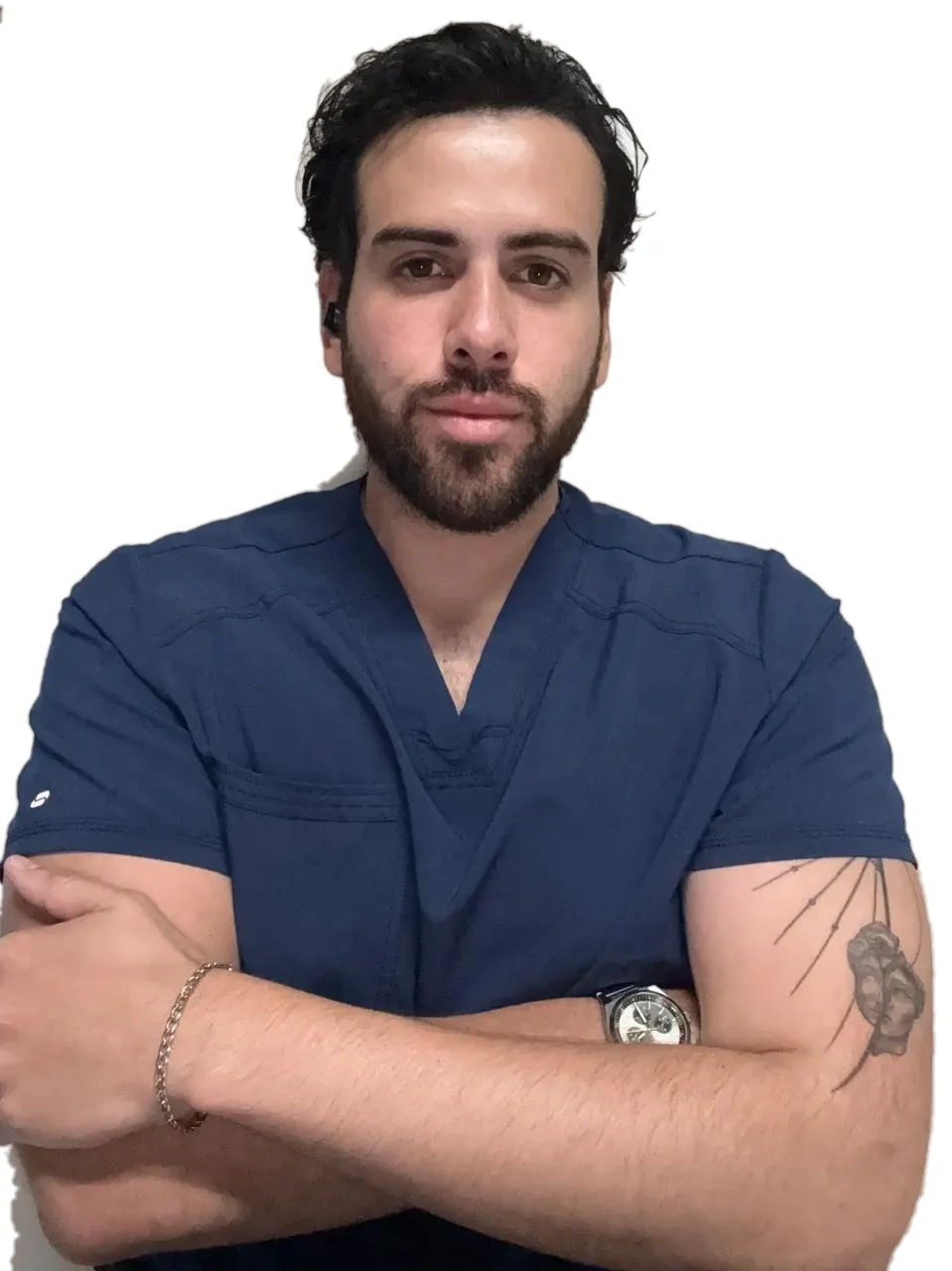
A Costa Rican physician in general practice, with a year of clinical training through the CCSS across primary care, hospital and ambulatory settings. He works daily with chronic pain, sleep disorders and inflammatory conditions, taking an evidence-based approach, and prescribes on what he finds rather than on what is asked for.

Over thirty years in scientific research as a molecular biologist, now working in functional nutrition. She specialises in functional blood chemistry analysis — reading a panel for the subclinical drift that sits inside the reference range and gets reported as normal. That is the part of this clinic most people underestimate.
Every prescription is written by a physician registered with the Colegio de Médicos y Cirujanos de Costa Rica, after an individual assessment, and dispensed by a licensed pharmacy.
from $277 per month, which is about ₡138,500 per month. That is the medicine and the clinic fee together. The initial assessment and the laboratory panel are separate, and are set out above.
Yes. Nothing is prescribed before your blood has been drawn and read. If you have recent results of your own, they may do instead of a fresh draw.
Then your doctor will say so, and you still leave with a plan. The fee buys the assessment and the reading of your results, not a prescription.
Usually not. Laboratory fees are paid to the laboratory and medicines at the pharmacy, so you can see every part of what you pay.
No. It is prescribed only once your blood has shown that your level has fallen, measured properly, at the right time of day. If it has not, your doctor will look for what else explains how you feel.
Because testosterone can raise the red cell count and affects the prostate and blood fats. Haematocrit, PSA and lipids are on the list for that reason, and they are re-checked, not measured once.
On blood drawn in the morning, usually more than once, read together with your symptoms. Testing testosterone properly explains why the timing matters.
Every patient starts the same way: an assessment with a physician, then a full biomarker panel drawn at a laboratory near you. Whether any medicine follows is your doctor’s decision, made after reading your results with you.
Measure my biomarkersThis page is information about a medical service. It is not medical advice, and nothing on it recommends or promotes any specific medicine. Treatment is prescribed only by a licensed physician after an individual assessment, and only where clinically appropriate.